
The best drawer slide depends on how the drawer will be built and used. Weight also matters. So do cabinet depth and opening style. The main types of drawer slides include side-mount, undermount, bottom-mount, and center-mount systems. Each option affects access, appearance, movement, and installation.
Homeowners often focus on cabinet doors and finishes first. However, drawer hardware shapes the daily experience just as much.
A drawer that sticks or feels unstable quickly becomes frustrating. Therefore, slide selection should happen during cabinet planning rather than after installation.
Comparing the Main Types of Drawer Slides
Different types of drawer slides can also support full-extension or soft-close functions. Therefore, mounting style should not be the only deciding factor.
Side-Mount Drawer Slides: Practical for Everyday Cabinets
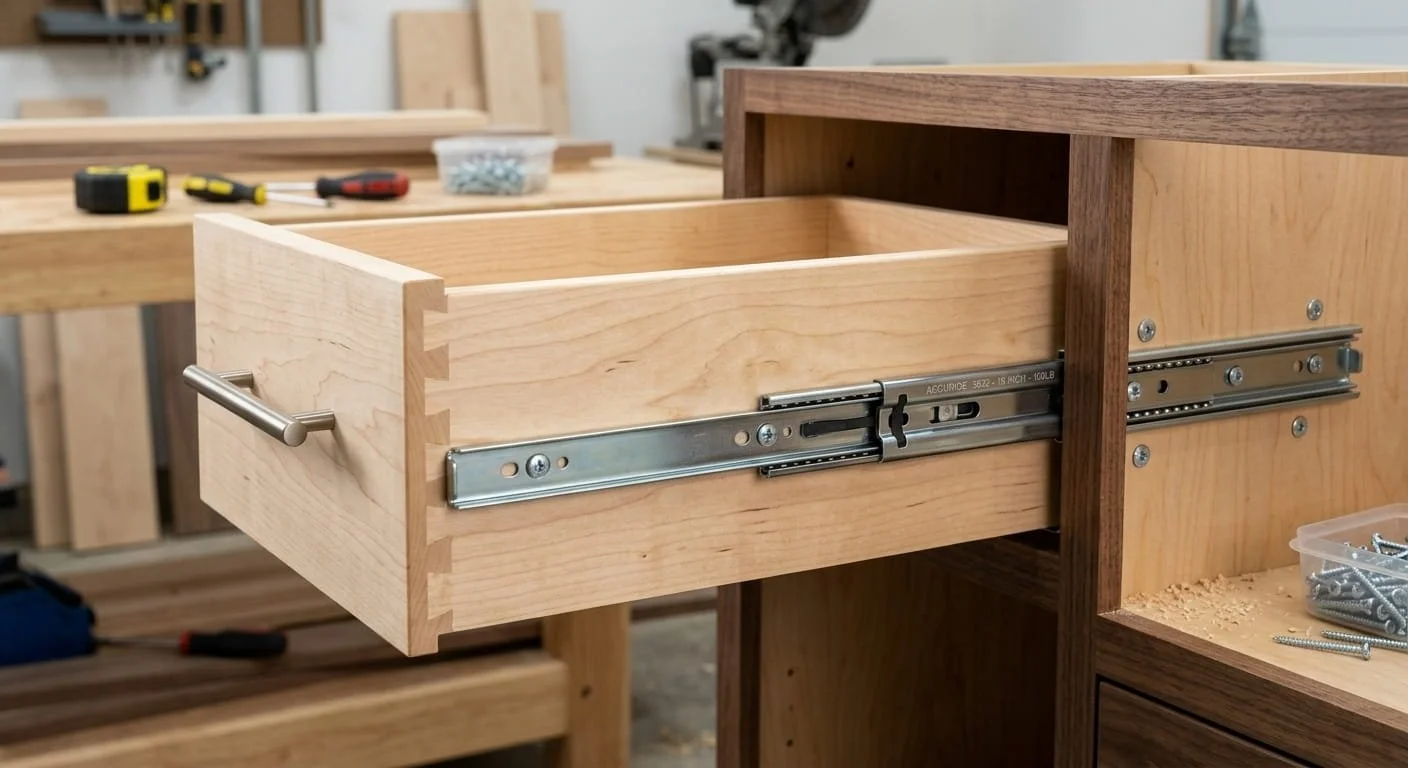
Side-mount slides attach between the drawer box and cabinet sides. Many versions use rollers or ball bearings for smooth movement.
Many cabinet drawer slides use this layout because it works across several cabinet styles. Full-extension versions make deep storage easier to reach. However, the hardware remains visible whenever the drawer is open.
A deep kitchen drawer holding pots needs hardware rated for frequent use and meaningful weight.
Measurements still need attention. Side-mounted drawer tracks require specific clearance between the drawer and cabinet. Manufacturers may use different dimensions. Therefore, select the hardware before finalizing the drawer box.
Undermount Drawer Slides: Clean Lines With Hidden Hardware
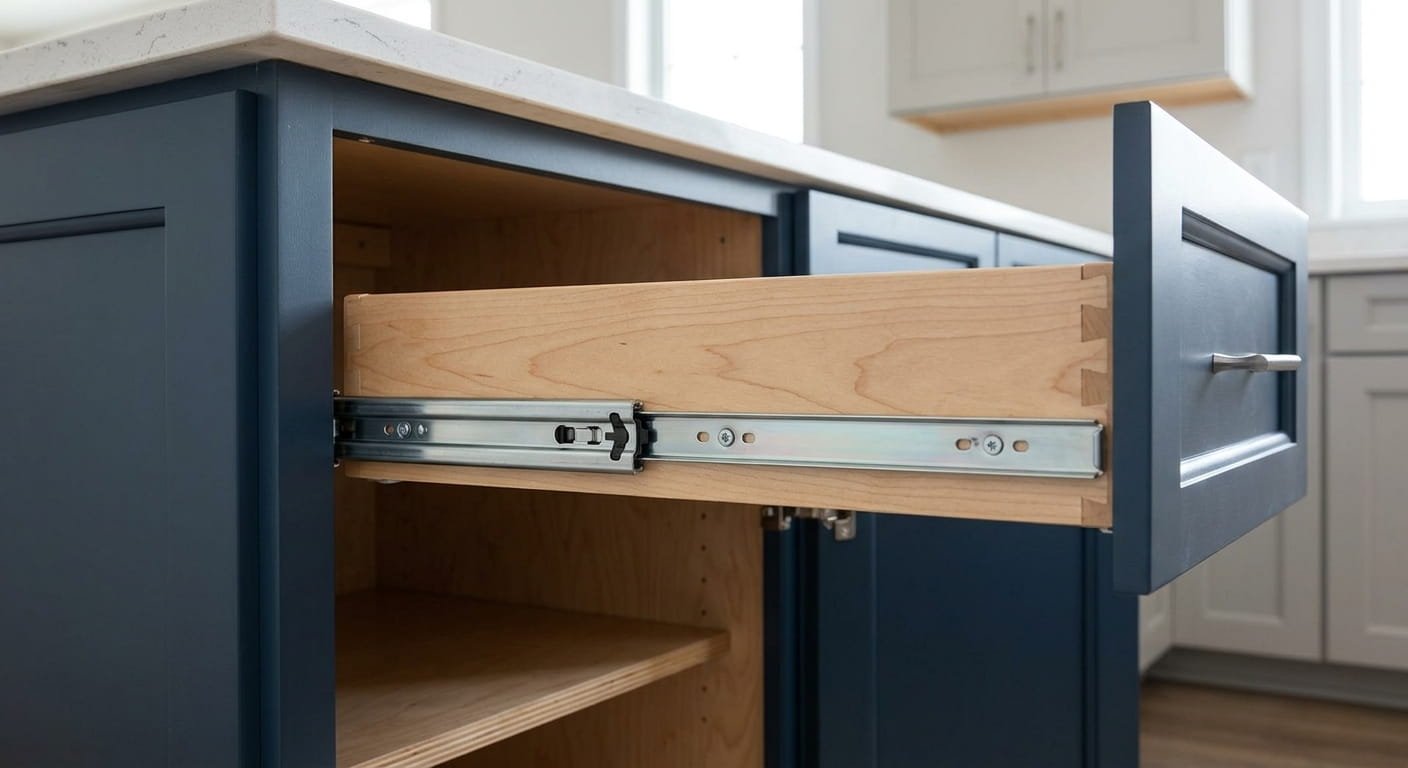
Undermount drawer slides sit beneath the drawer rather than along its visible sides. The hardware disappears when the drawer opens. As a result, wood drawer boxes and cabinet details stay visually clean.
Custom kitchen cabinetry often benefits from this approach. Handle-free European cabinets are a strong example. Concealed runners keep the focus on the cabinet itself.
Many concealed systems also support soft-close and full-extension movement. However, precise construction matters. Drawer width, depth, bottom position, and locking points must match the chosen system.
A wide kitchen drawer may also need a higher load rating. Cookware creates different demands than cutlery. Good drawer slider hardware should match the actual storage plan instead of appearance alone.
Bottom-Mount Drawer Slides: Simple but Often Misunderstood
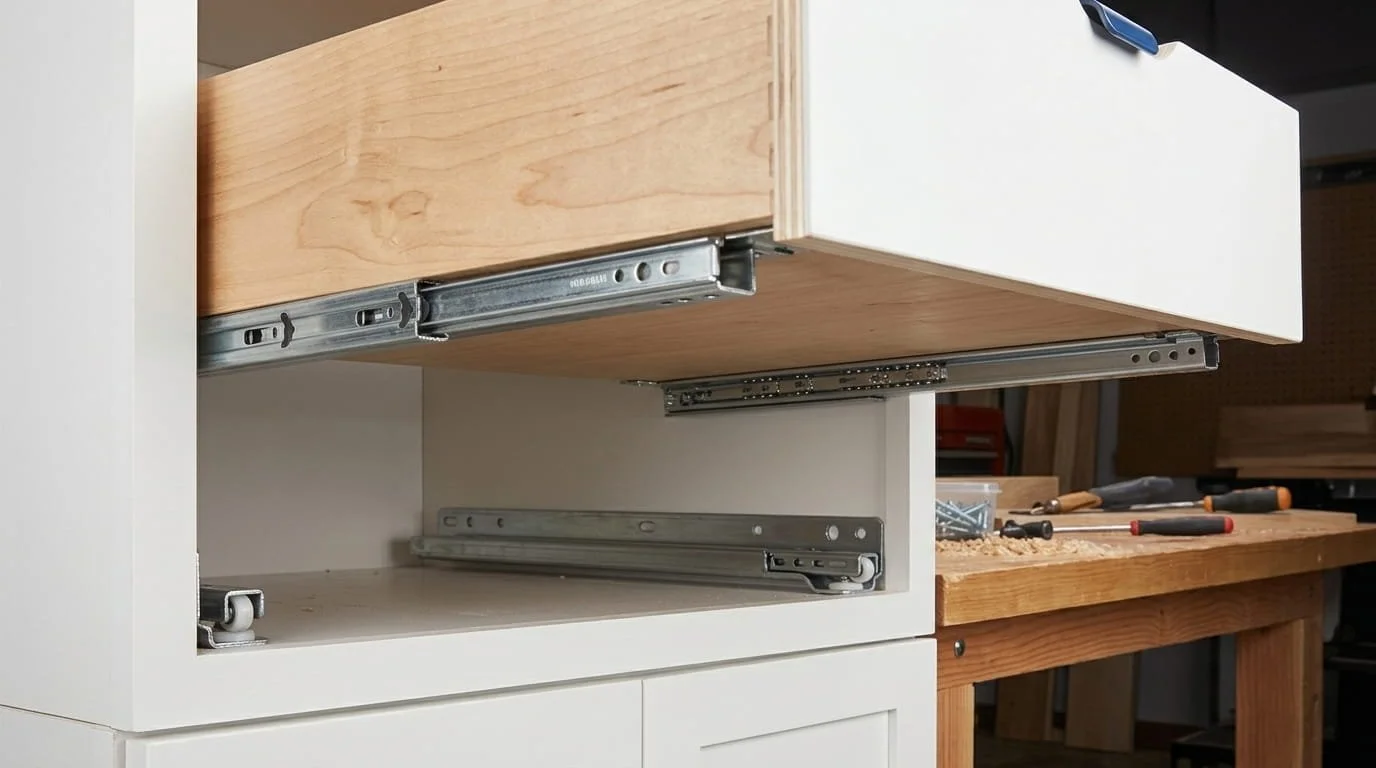
Bottom-mount drawer slides are often confused with concealed systems because the names sound similar. However, traditional bottom-mounted hardware may sit near the lower drawer edges and remain partly visible.
Basic roller systems can suit lighter storage or replacement projects when existing construction matches the hardware.
Homeowners should check the mounting diagram before ordering. Product names may not explain how each part attaches. Furthermore, drawer glides sold as bottom-mount hardware can differ from fully concealed runners.
Older cabinets show why this matters. Replacing worn hardware with a similar system may be simpler than rebuilding every drawer box.
Center-Mount Slides: Better for Lighter Drawers
Center-mount hardware uses one slide beneath the middle of the drawer. The setup keeps most hardware out of sight. However, one central slide usually provides less support than paired systems.
Furniture drawers and narrow vanity drawers can be good candidates. In contrast, wide kitchen drawers holding cookware need stronger support.
A bathroom drawer may hold light grooming tools. Meanwhile, a kitchen drawer may carry pans or small appliances.
Drawer Slide Features Matter as Much as Mounting Style
Choosing between types of drawer slides is only part of the decision. Opening behavior can change how cabinetry feels during everyday use.
Soft-Close
Soft-close hardware slows the drawer near the end of travel. Then the mechanism pulls it shut gently.
Self-Close
Self-close systems pull the drawer inward after it reaches a certain point. Speed control may not be included.
Push-to-Open
Push-to-open systems release after pressure is applied to the front. Handle-free kitchens often use this feature.
Full Extension
Full-extension slides let the drawer travel farther out. Therefore, items near the back become easier to reach.
Over-Travel
Over-travel hardware extends beyond the cabinet face. Certain layouts benefit when surrounding surfaces restrict access.
Features also need to work with the chosen drawer tracks. Not every mechanism suits every cabinet box. As a result, drawer slider hardware should be specified alongside the cabinetry.
Which Types of Drawer Slides Should You Choose?
The right choice becomes clearer when you start with the drawer’s job. Appearance matters. However, storage weight and daily use matter more.
For everyday kitchen cabinets, side-mount or concealed soft-close systems are practical choices. Both can provide smooth movement when sized correctly.
For custom kitchen cabinetry, undermount drawer slides often create the cleanest finished look. Hidden hardware works especially well with detailed wood boxes or frameless cabinets.
For bathroom cabinets, compact side-mount or concealed systems can both work well. Correct sizing remains essential in smaller vanity layouts.
For heavy cookware drawers, choose cabinet drawer slides with a suitable load rating. Wide drawers need enough support through repeated use.
For older cabinetry, matching existing drawer glides can reduce unnecessary rebuilding. However, damaged drawers may need more than a simple hardware swap.
Check These Details Before Ordering Drawer Slides
A hardware choice can look perfect online and still fail during installation. Measurements should come first.
Check cabinet depth before choosing slide length. Next, confirm drawer width and the manufacturer’s required clearances. Face-frame and frameless cabinets may need different mounting parts.
Weight deserves equal attention. Consider the empty drawer plus everything likely to be stored inside. A pantry pull-out becomes much heavier once filled.
Extension also affects usability. Partial extension may suit small drawers. Full extension makes deep cabinets easier to organize.
Selected bottom-mount drawer slides should match the drawer bottom and cabinet construction. Likewise, concealed systems need the correct mounting points.
A careful comparison of types of drawer slides should always include fit, weight, extension, and opening style.
InstallKitch Tip: Choose drawer hardware before finalizing the drawer box. Small clearance differences can affect width, alignment, and movement.
Choosing Drawer Hardware for a New York Cabinet Project
Cabinet planning in New York often involves tight rooms and existing structures. Brooklyn homes can add another challenge because older layouts rarely follow one standard cabinet size.
Storage therefore needs to work harder. Deep drawers can replace hard-to-reach lower shelves. Full-extension systems can improve access in compact kitchens. Meanwhile, custom bathroom cabinets cab may need narrow drawers shaped around plumbing.
Nearby areas may have different layouts, but the same rule applies. Start with the space and intended use.
At InstallKitch, drawer boxes, fronts, hardware, and installation are planned to work together as one cabinet system.
Final Thoughts
No single option works for every cabinet. The best types of drawer slides depend on drawer size, weight, cabinet construction, and preferred movement. Side-mount systems offer practical strength. Concealed systems create a cleaner appearance. Bottom-mount hardware suits straightforward applications. Center-mount slides work better for lighter drawers.
Planning a kitchen, bathroom, or custom cabinet project in Brooklyn or New York? Install Kitch can help match storage needs with the right cabinet construction and hardware from the beginning.
Also Read: Types of Cabinet Hinges