
Counter Depth vs Standard Depth Refrigerators: Which One Actually Fits Your Kitchen?
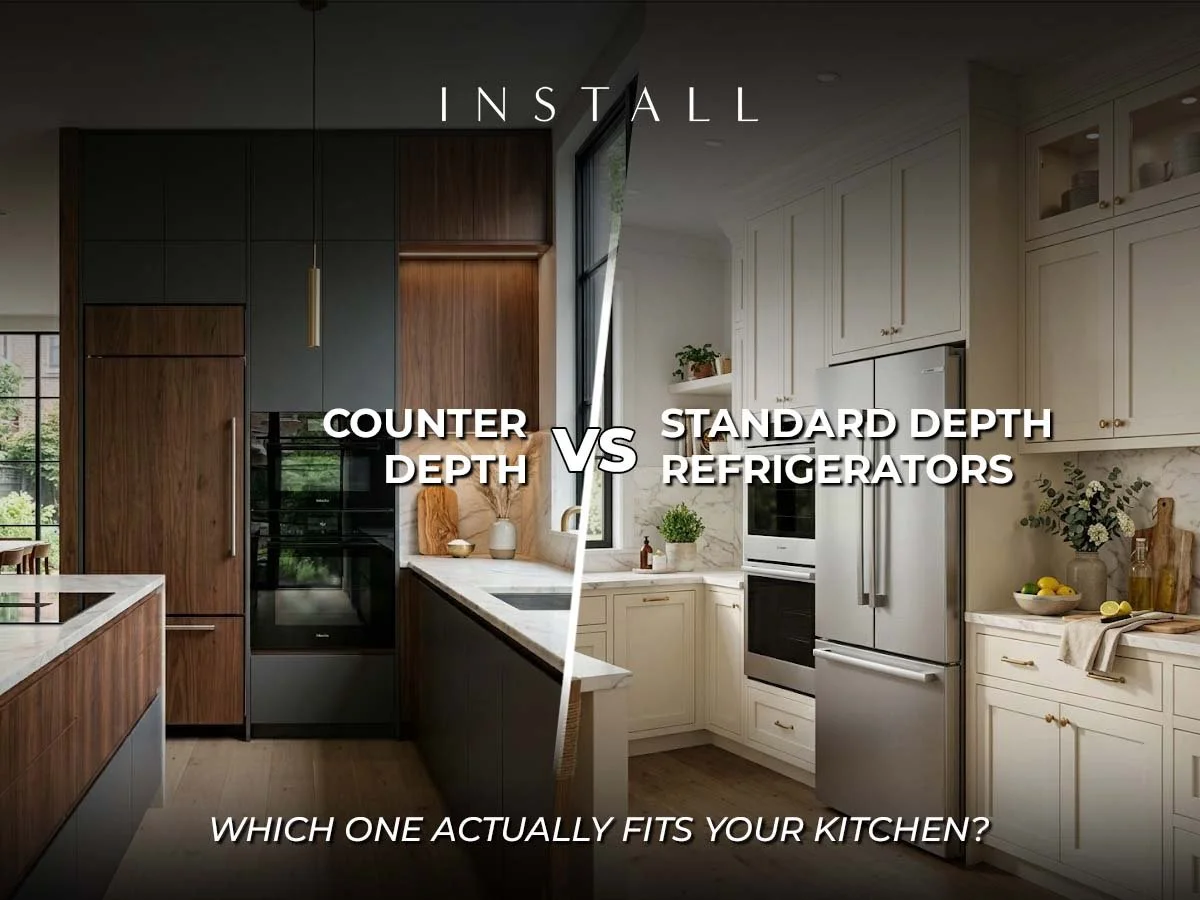
Most homeowners pick a refrigerator based on looks alone. Then it arrives, and it sticks out past the cabinets by six inches. Suddenly, the kitchen feels cramped.
Depth is everything. Get it wrong, and no amount of great cabinetry fixes it. Get it right, and your kitchen looks intentional, like every piece belongs there.
This blog breaks down the real differences, the trade-offs, and how to match your fridge to your cabinet setup. Whether you are in a Brooklyn apartment or a larger New York home, this decision matters more than most people realize.
Key Differences Between the Two
Understanding counter-depth vs standard depth refrigerators starts with a simple measurement.
Standard depth models offer more cubic footage inside. Counter depth models offer a cleaner, built-in look. Both have real value, but only one will work well in your specific kitchen.
Below is a Quick Side-by-Side Breakdown:
| Feature | Counter Depth | Standard Depth | Best For | Price Range |
|---|---|---|---|---|
| Depth | 24–25 inches | 30–34 inches | Modern kitchens | Higher upfront |
| Cabinet Fit | Flush with cabinets | Sticks out 6–8 in | Traditional kitchens | More affordable |
| Storage | Less cubic footage | More cubic footage | Large families | Varies by brand |
| NYC Suitability | Great for NYC homes | Better for large homes | Suburban spaces | Budget-friendly |
| Installation | Easier in tight spaces | May need adjustments | Open floor plans | Lower long-term cost |
The table above gives a clear picture. However, the right choice depends on your space, your cabinet layout, and your daily routine. Each factor plays a role.
Pros and Cons of Counter-Depth Refrigerators
Counter depth refrigerators have become popular in modern kitchen design, especially in New York City where space is tight and aesthetics matter.
Pros
• Sits flush with your cabinets creates a coherent, built-in look.
• Better kitchen flow, no fridge door blocking walkways or cabinet doors.
• Easier to see and reach items at the back.
• Ideal fit for Brooklyn apartments and compact New York City kitchens.
• Works beautifully with custom kitchen cabinetry and modern layouts.
• Adds real resale value, buyers notice a clean, cohesive kitchen.
Cons
• Less storage than a standard depth model, typically 4 to 6 cubic feet less.
• Higher price point across most brands.
• Fewer style, color, and brand options available.
• Older kitchens may need cabinet modifications before installing.
• Not the best choice for large families who need maximum refrigerator space.
"A counter depth refrigerator does not just look better — it makes the whole kitchen feel more intentional."
Pros and Cons of Standard-Depth Refrigerators
Standard depth refrigerators remain the most common choice in American homes. They offer more storage, more variety, and a lower price tag. Therefore, they still make sense for many households.
Pros
• More internal storage, better for large families or big weekly grocery runs.
• Lower cost compared to counter depth models of similar capacity.
• Wider range of styles, finishes, and brands to choose from.
• Common fit for regular cabinet layouts in older homes.
• Easier to find replacement parts and service technicians.
• More options for French door, side-by-side, and bottom freezer styles.
Cons
• Sticks out 6 to 8 inches beyond regular cabinet depth, disrupts visual flow.
• Makes kitchens feel narrower, especially in smaller New York homes.
• Harder to access items pushed to the back.
• Not ideal for open-plan kitchens where the fridge is visible from living areas.
• Can interfere with cabinet doors or kitchen island clearance.
"Standard depth gives you more space inside the fridge — but less space to move around in your kitchen."
Which Refrigerator Fits Your Kitchen Best?
A counter-depth refrigerator case matches standard 24-inch cabinet depths, but the doors and handles will extend 2.5 to 4 inches past the cabinet face. This clearance is required so the hinges can swing open past 90 degrees without damaging surrounding cabinetry. Only fully integrated, panel-ready refrigerators sit completely flush with door faces.
Furthermore, depth cabinet planning affects more than just the fridge. Bathroom cabinets, pantry cabinets, and kitchen cabinets all have depth considerations. When these dimensions align, the whole home feels better planned.
Installation Considerations
Installation is where many homeowners get caught off guard. Buying the right refrigerator is only half the job. Getting it to fit properly is the other half.
Measuring Your Space Correctly
Always measure your kitchen opening before purchasing. Measure the width, height, and depth of the space, including any overhead cabinets that might block a taller unit.
Check your flooring as well. Tile or hardwood transitions can affect how the refrigerator sits and whether the doors clear properly when opened.
Plumbing and outlet depth caught many homeowners off guard. A standard ice-maker water valve protruding from the wall adds 1 to 2 inches behind the unit, pushing a counter-depth fridge out into the walkway. To achieve a true cabinet-aligned fit, install a recessed water outlet box inside the wall cavity during your renovation.
Cabinet Modifications You May Need
Older kitchens in Brooklyn often have non-standard cabinet configurations. Installing a counter depth refrigerator in a space built for a standard unit may require adjusting surrounding cabinets.
In some cases, custom cabinet is the smartest solution. Building new cabinets around your chosen refrigerator, rather than retrofitting a fridge into old cabinetry, produces cleaner results every time.
Conclusion
The counter depth vs standard depth refrigerators debate comes down to one question: what does your kitchen actually need?
Counter depth wins on aesthetics and space efficiency. Standard depth wins on storage and budget. Neither is universally better. Both work well when matched to the right kitchen layout and cabinet setup.
The key is to plan your kitchen as a whole, not as a collection of individual purchases. Cabinets, appliances, and space all work together. When they align, the result speaks for itself.
Read More: When choosing between counter-depth and standard-depth refrigerators, it’s important to think about how these appliances fit within your overall kitchen storage design. Understanding the terminology and differences in storage units can also help you plan more effectively. For a clearer breakdown of these concepts, check out Cupboard vs Cabinet: Breaking Down Real Differences.