
Cupboard vs Cabinet: Breaking Down Real Differences
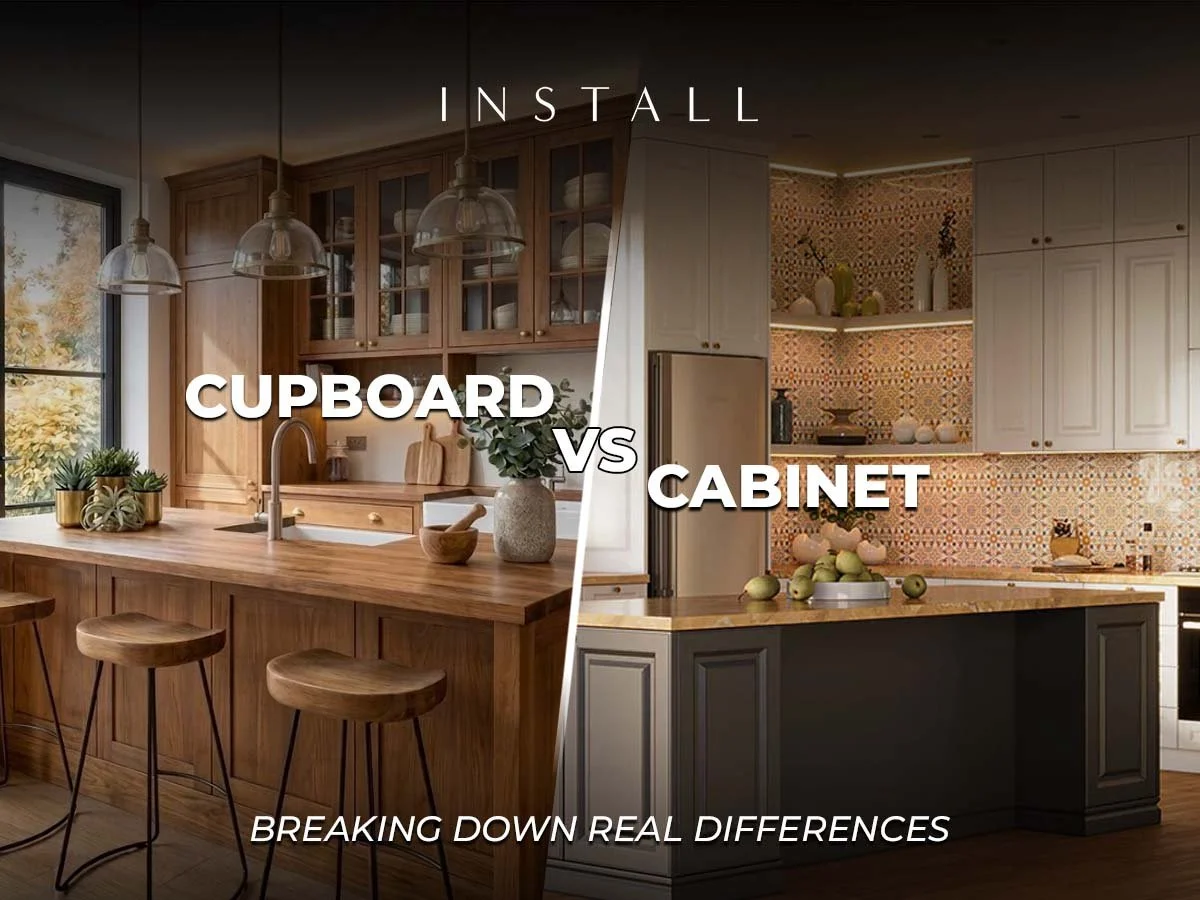
A cupboard and a cabinet are not the same thing. Most people use both words interchangeably, but they really should not. Knowing the real difference between a cupboard and a cabinet helps you make smarter decisions for your home.
What Is a Cupboard?
A cupboard is a freestanding or built-in storage unit, typically closed with one or two doors. Originally, a cupboard was just a board for holding cups and dishes. Over time, the meaning changed.
Today, a cupboard is most commonly used for storing dry goods, linens, and general household items. You will find them in pantries, bedrooms, and hallways across countless American homes. Traditional English kitchens still favor freestanding cupboards as a primary storage choice.
What Is a Cabinet?
A cabinet is a more structured storage unit, built specifically to fit a room. Cabinets are wall-mounted, base-installed, or fully integrated into the room layout, especially in kitchens and bathrooms. Furthermore, cabinets are designed with shelves, drawers, and compartments built around a clear purpose. Every part of a cabinet has a job.
Understanding the cupboard vs cabinet distinction starts with recognizing how each unit is actually built and where it belongs.
How They Differ in Structure and Purpose
Cupboards are generally freestanding and suitable for general storage. Cabinets, on the other hand, are fixed in place and designed for a specific function in a specific room.
A cupboard holds whatever you put in it. A cabinet is engineered around what should go inside. Moreover, cabinets are the standard choice in modern American kitchen and bathroom design.
The Material Difference That Matters
Materials tell part of the story, too. Cupboards are often built from solid wood or MDF in simple finishes. Cabinets, in contrast, use hardwood frames, plywood box construction, and precision hardware. The quality difference is clear, as is the price.
A Note on Regional Terminology
One more distinction worth knowing: terminology varies by region. In the United Kingdom, "cupboard" covers a wide range of storage, including what Americans call a closet. In the United States, "cabinet" is the standard term for kitchen and bathroom storage.
Therefore, both the word you use and the product you choose depend on where you live and how you plan to use the space.
Which One Actually Works Better in a Kitchen?
In a modern kitchen, cabinets are the clear practical choice. The reasons go well beyond looks.
The Case for Kitchen Cabinets
Wall cabinets mount above the countertop and keep everyday essentials within reach. Base cabinets support the countertop and store pots, pans, and appliances below. Tall cabinets stretch from floor to ceiling and maximize every inch of vertical storage. Together, they form a complete, fully functional kitchen system built around how you cook.
Where a Cupboard Still Has a Role
A cupboard in a kitchen plays a supporting role, not a leading one. A pantry cupboard works well for dry food, canned goods, or cleaning supplies. Nevertheless, a single cupboard cannot replace a properly planned cabinet layout. Most kitchens in New York City apartments use both base cabinets for daily cooking needs and a pantry cupboard for overflow storage.
Homeowners who understand the cupboard vs cabinet distinction early avoid costly redesigns later.
Choosing between a cupboard and a cabinet comes down to three things: the room, your storage needs, and your budget.
Start With the Room
Start with the room itself. Kitchens and bathrooms almost always call for cabinets. Bedrooms, hallways, and utility areas can work with either. Think about daily use, what needs to be stored and how often you reach for it.
Think About Your Storage Needs
Next, think about your storage needs. Do you need fixed, organized compartments built around a purpose? A cabinet is the right answer. Do you need a flexible unit you can move or repurpose? A freestanding cupboard gives you that kind of freedom.
Every homeowner facing a cupboard vs cabinet decision benefits from knowing what each unit is actually designed to do.
Budget and Long-Term Value
Budget plays a real role as well. Freestanding cupboards cost less upfront. Custom kitchen cabinetry, on the other hand, adds measurable long-term value to your home.
In competitive markets like Brooklyn, well-designed kitchen cabinets directly affect resale value. Treating cabinetry as a long-term investment, not just a purchase, makes real financial sense.
Style matters too. A farmhouse kitchen suits open shelving and freestanding cupboard storage. A modern New York apartment suits sleek, handle-free built-in cabinets. Many homes blend both, structured cabinets for daily function and a freestanding cupboard for added personality.
Conclusion
The cupboard vs cabinet difference is clear once you know what each one is designed to do.
Cabinets are built-in, structured, and designed for specific rooms. Cupboards are freestanding, flexible, and better suited to general storage needs. Knowing which belongs in each space saves time, money, and a lot of second-guessing.
At Install Kitch, we have spent years helping homeowners across New York City make confident storage decisions. From Brooklyn brownstones to Manhattan apartments, we have seen every layout, every budget, and every design challenge a home can present.
Planning a kitchen renovation? Upgrading your bathroom storage? Starting a new build? Our team is ready to help you get it right from day one.