
How To Organise Kitchen Cabinets?
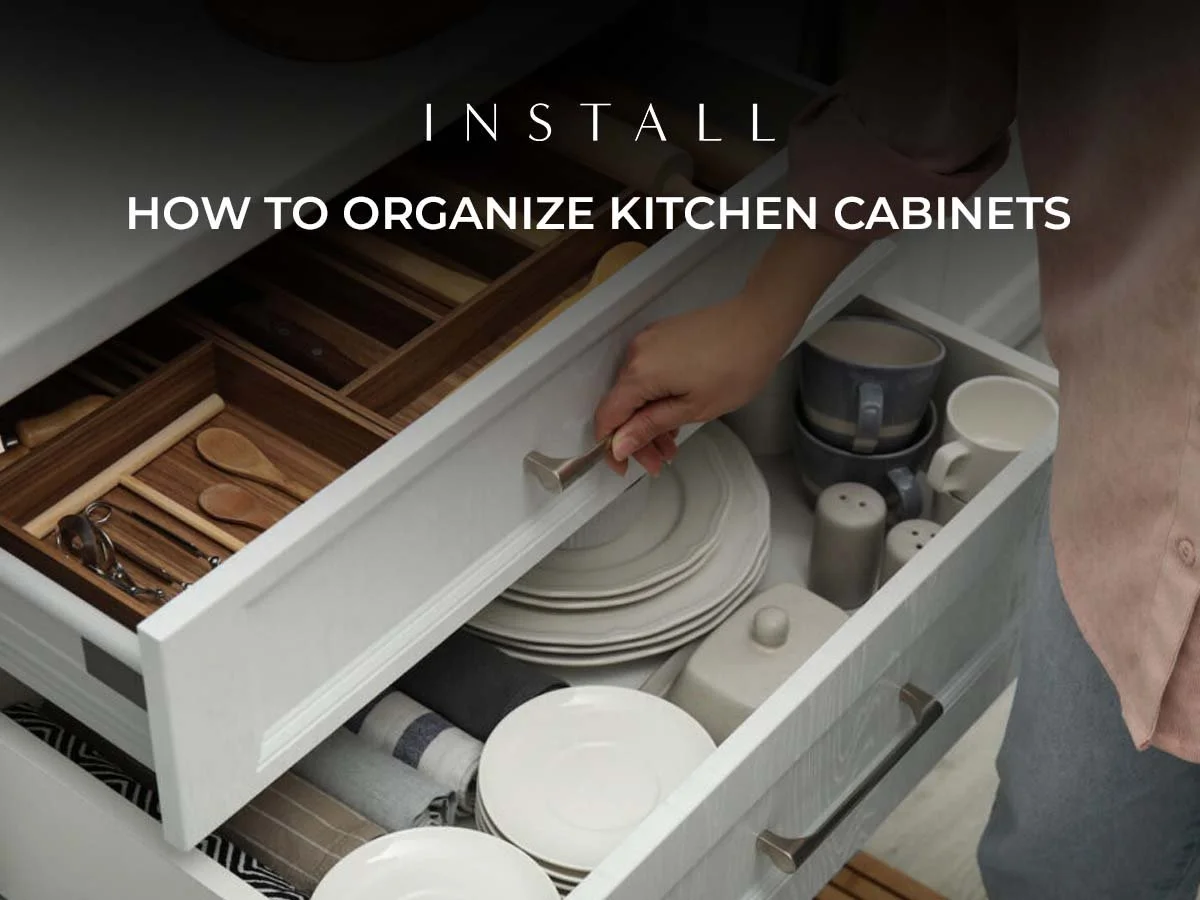
Here is the honest answer: Organizing kitchen cabinets has nothing to do with buying fancy bins. Every item needs one home. One spot it always goes back to. When that does not exist, no amount of rearranging fixes anything. Cabinets get messy again within days. Sound familiar? Most homeowners go through this cycle repeatedly. The fix is not complicated, but most people skip the step that matters most, building an actual system. These tips walk you through exactly that.
The Real Reason Your Cabinets Never Stay Clean
Be honest for a second. How many times have you reorganized your cabinets only for them to look worse a month later? The issue is not your cleaning habits. Items never had a proper place to begin with.
You moved things around but never assigned them a real home. Furthermore, a cabinet without dividers or compartments physically cannot stay organized, no matter how hard you try. Fix the system first. Everything else becomes easier from there.
Step 1: Pull Everything Out First
Do not skip this step. Take every single item out before doing anything else. Yes, your kitchen will look like a disaster for about an hour. Worth it. Seeing everything in one place is genuinely eye-opening.
People often find three bottle openers, expired goods from two years ago, and appliances they completely forgot about. Keep what you actually use. Get rid of what you do not. Wipe the empty shelves down while you have the chance. Starting on a clean surface makes a bigger difference than most people expect.
Step 2: Assign Every Cabinet One Job: This Is How to Organize Kitchen Cabinets Properly
Stop mixing random items in random cabinets. Each cabinet needs one job only. Cooking tools go near the stove. Baking supplies get their own dedicated space. Dishes and mugs stay close to the sink.
When cabinets have defined roles, you stop second-guessing where things go. Moreover, putting groceries away becomes automatic. A zone-based layout is one of the best kitchen storage solutions and costs absolutely nothing to set up.
Simple zones that work in most kitchens:
Cooking tools — near the stove or range
Baking supplies — flour, sugar, pans, mixing bowls
Dishware — plates, bowls, mugs near the sink
Pantry goods — dry goods, canned items, snacks
Cleaning supplies — under the sink, clearly separated
Step 3: Stop Wasting the Vertical Space You Already Have
Look inside one of your cabinets right now. See all that empty air above your plates? Wasted storage. Shelf risers and stackable organizers fill that gap without replacing anything. Use tiered shelves in pantry cabinets so canned goods face forward, and labels stay readable.
Vertical storage matters especially in compact New York City kitchens where counter space runs out fast. Therefore, using the full height of each cabinet is one of the simplest improvements available. A shelf riser costs around ten to fifteen dollars and changes how a cluttered shelf functions entirely.
Step 4: Keep Daily Items Where You Can Grab Them Fast
Good cabinet organization is really just common sense applied consistently. Things you reach for every day should never be buried or stored high up. Plates, mugs, cooking oils, and daily spices belong at eye level. Holiday trays and seasonal gear belong toward the back or on higher shelves.
When daily items are always front and accessible, your whole cooking routine speeds up. Additionally, returning items to the right spot feels natural rather than forced. Natural habits stick. Forced systems fall apart by week two.
Step 5: Deal With Pots, Pans, and Lids Once and For All
Pots and pans frustrate more homeowners than almost any other storage problem. Stacking them ruins the finish and means moving five things just to grab the one you need. A vertical pan organizer lets every piece stand upright on its own. Lids are a separate battle entirely.
A simple lid rack or tension rod mounted inside the cabinet keeps them separated and easy to grab. Custom kitchen cabinetry from Install Kitch comes with built-in dividers made specifically for cookware. However, a basic organizer from any home goods store solves the same problem at a fraction of the cost. Either way, stop stacking.
Step 6: Drawer Dividers for Small Tools
Small tools are the fastest way to undo an otherwise organized kitchen. Spatulas, whisks, peelers, and measuring spoons always end up in a tangled pile without proper sections. Drawer dividers fix this completely.
Give cutlery clearly defined, separate slots so nothing gets mixed up during a busy dinner rush. Similarly, dedicated spots for can openers and graters prevent random piles from forming in the first place. Divided drawers are one of the most underrated and affordable kitchen storage solutions for any kitchen size.
Step 7: Stop Ignoring Your Corner Cabinets
Corner cabinets have a reputation for being useless. That reputation is fair, but only if you do nothing with them. Their deep shape makes items easy to forget and hard to reach. A lazy Susan changes that entirely. Rotate it, and everything inside comes forward instantly.
Use corner cabinets for mixing bowls, occasional-use appliances, and larger cookware. Install Kitch has helped hundreds of homeowners across Brooklyn transform neglected corner spaces into genuinely useful storage. The right hardware is all it takes.
Step 8: Organize Pantry Cabinets So You Can See Everything
Pantry cabinets are probably the messiest spot in most kitchens. Boxes of different sizes, half-open bags, and random cans create visual chaos fast. Clear, labeled containers fix this without changing the cabinet at all.
Move rice, pasta, cereal, and flour into matching uniform containers. Shelves instantly look calmer. Besides looking cleaner, clear containers show when something is running low before it runs out. As a result, your grocery list becomes more accurate, and food waste drops noticeably.
Step 9: Label Everything — Seriously
Labels feel unnecessary until you share a kitchen with other people. Without them, items wander into the wrong spots and the system slowly falls apart. Clearly labeled shelves, containers, and pantry sections keep everyone on the same page without a single conversation about it. Furthermore, labeled cabinets cut the time spent searching during a hectic weeknight dinner significantly. Once the labeling habit is set, maintaining the whole system takes almost no active effort. Small habit. Big payoff every day.
Why the Cabinet Itself Changes Everything
No organization tip fully compensates for a poorly designed cabinet. Cabinets without adjustable shelves force you to work around fixed limitations constantly. Cabinets without divided drawers mean small items will always pile up. Custom kitchen cabinetry built with soft-close drawers, designed compartments, and adjustable shelving makes every tip in this guide easier to apply and maintain long-term.
At Install Kitch, we design and install kitchen cabinets and bathroom cabinets for homeowners across Brooklyn, New York City, and surrounding neighborhoods. Our cabinets are built around how people actually use their kitchens, not just how they look on day one.
Final Thoughts
Figuring out how to organize kitchen cabinets is not about perfection. Besides decluttering, lasting organization means committing to a real system and maintaining it over time. Zone your cabinets. Use every inch of vertical space. Add dividers and label consistently. Most importantly, start with cabinets actually built to hold order, not ones you fight against every single day.
Ready to stop fighting your kitchen? Contact Install Kitch today. We will design a custom cabinet system built around your space, your routine, and your home.