
10 Common Types of Cabinet Hinges and Their Uses

Cabinet hinges control how your doors open, close, and stay aligned over time. The main types of cabinet hinges include standard options like butt, overlay, inset, and pivot hinges. Specialty choices include concealed European, soft-close, self-closing, wrap-around, semi-concealed, and demountable hinges. Each one suits a different door style, cabinet frame, and budget.
Hinges are small pieces of cabinet hardware, but picking the wrong one causes real problems down the line. Doors sag. They swing loose or stop sitting flush against the frame.
A mismatched hinge can even force you to redrill the cabinet box just to fix a fit issue. Below, we break down each hinge type, what it does well, and where it falls short.
Which Types of Cabinet Hinges Work Best for Your Kitchen?
Before choosing a hinge, check how your cabinet doors sit against the frame. Cabinetmakers call this overlay, and it narrows your options fast.
Inset doors sit flush inside the cabinet opening, leaving an even gap on every side. Partial overlay doors cover part of the frame and leave some wood exposed when open. Full overlay doors cover the entire frame for a seamless, modern front.
Inset cabinetry typically pairs with butt hinges or inset European hinges. Partial overlay doors work well with wrap-around or partial-overlay concealed hinges. Full overlay kitchens, meanwhile, almost always use full-overlay European hinges to keep hardware out of sight.
Overlay itself usually falls between 1/2 inch and 1 1/2 inches, and full overlay doors typically leave a reveal of about 1/8 to 3/16 inch between neighboring fronts. Get that number wrong, even slightly, and doors either overlap their neighbor or leave a gap wide enough to see into the cabinet box.
1- Butt Hinges

Butt hinges are the oldest and most recognizable type of cabinet hinge. Two metal leaves connect through a center pin. One leaf mounts to the door, and the other mounts to the frame. Since they sit visibly on the cabinet face, they suit traditional, farmhouse, or vintage kitchen cabinets. We still see them requested often in Brooklyn brownstone renovations, where face-frame cabinetry and a period-correct look matter as much as function.
Pros: Durable and simple to install. Handles heavy, solid wood doors well.
Cons: Visible when the door is closed. Offers little adjustment once mounted.
2- Concealed Hinges (European Hinges)

Concealed hinges, often called cup hinges, hide completely behind the door when closed. A round cup sits inside a drilled recess in the door, while a mounting plate attaches inside the cabinet frame. Most modern kitchen cabinet hinges use this design because nothing shows from the outside. Nearly all of them bore a 35mm cup, a sizing standard set decades ago that still lets you swap between brands like Blum, Salice, or Hettich without redrilling the door. Opening angles usually run 90, 110, or 165 degrees, and the wider angles matter most on cabinets that sit beside an appliance or a wall.It is commonly used in modular kitchens and frameless cabinets like european kitchen cabinets.
Pros:
Hidden from view
Adjustable in multiple directions
Often come with soft-close options.
Cons:
Slightly more complex installation
Higher cost than traditional hinges
3-Soft Close Cabinet Hinges
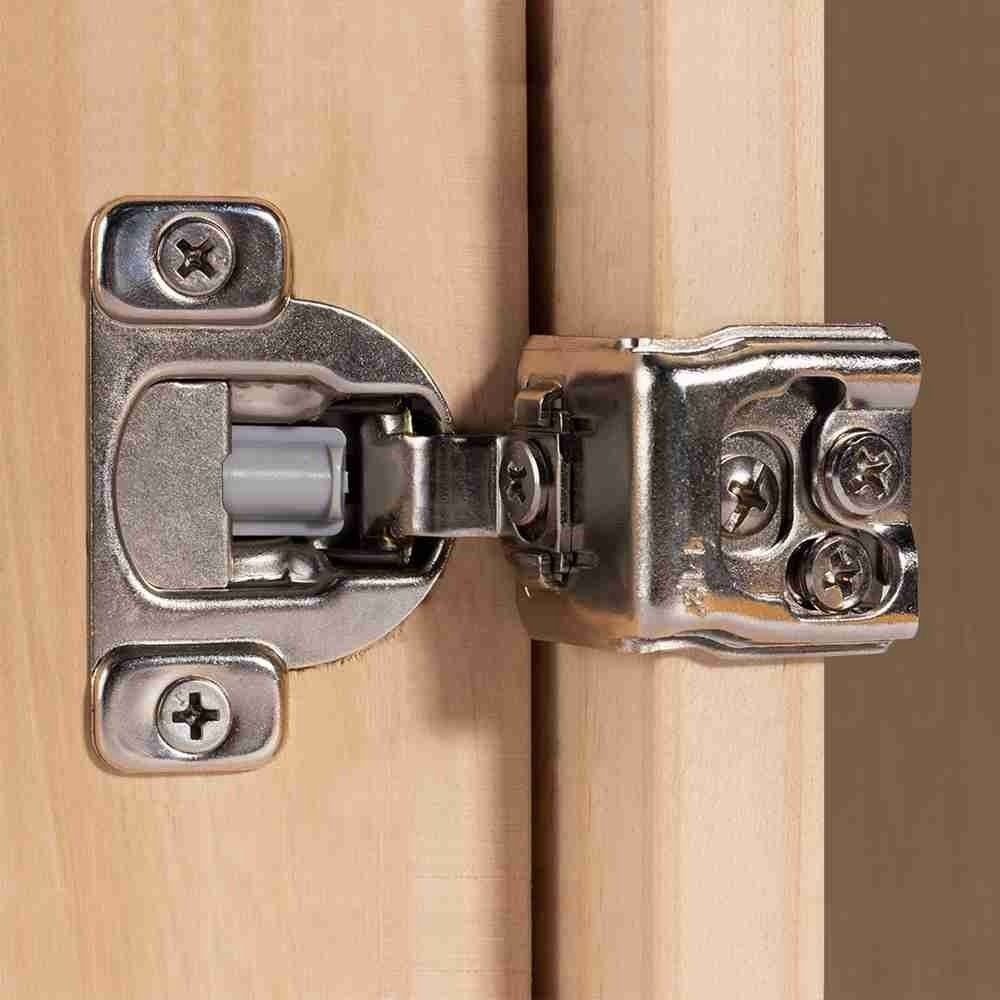
Soft-close hinges use a small hydraulic or pneumatic damper built into the hinge body. As the door nears the frame, the damper slows its swing and prevents slamming. Because of that, soft-close hinges have become a popular upgrade in busy kitchens and homes with young kids.
Pros: Prevents slamming and cuts down on noise. Reduces wear on cabinet frames.
Cons: Costs more than standard hardware. The damper occasionally needs adjustment.
4-Self-Closing Cabinet Hinges

Self-closing hinges work differently. A spring inside the hinge pulls the door shut once it passes a certain angle, so you never have to push it fully closed. Unlike soft-close hinges, they rely on tension rather than a damper, so the final close comes quicker and a bit louder.
Pros: Keeps doors from sitting ajar. Costs less than soft-close hardware.
Cons: Closes with more force and noise. Spring tension can loosen with heavy use.
5-Overlay Hinges
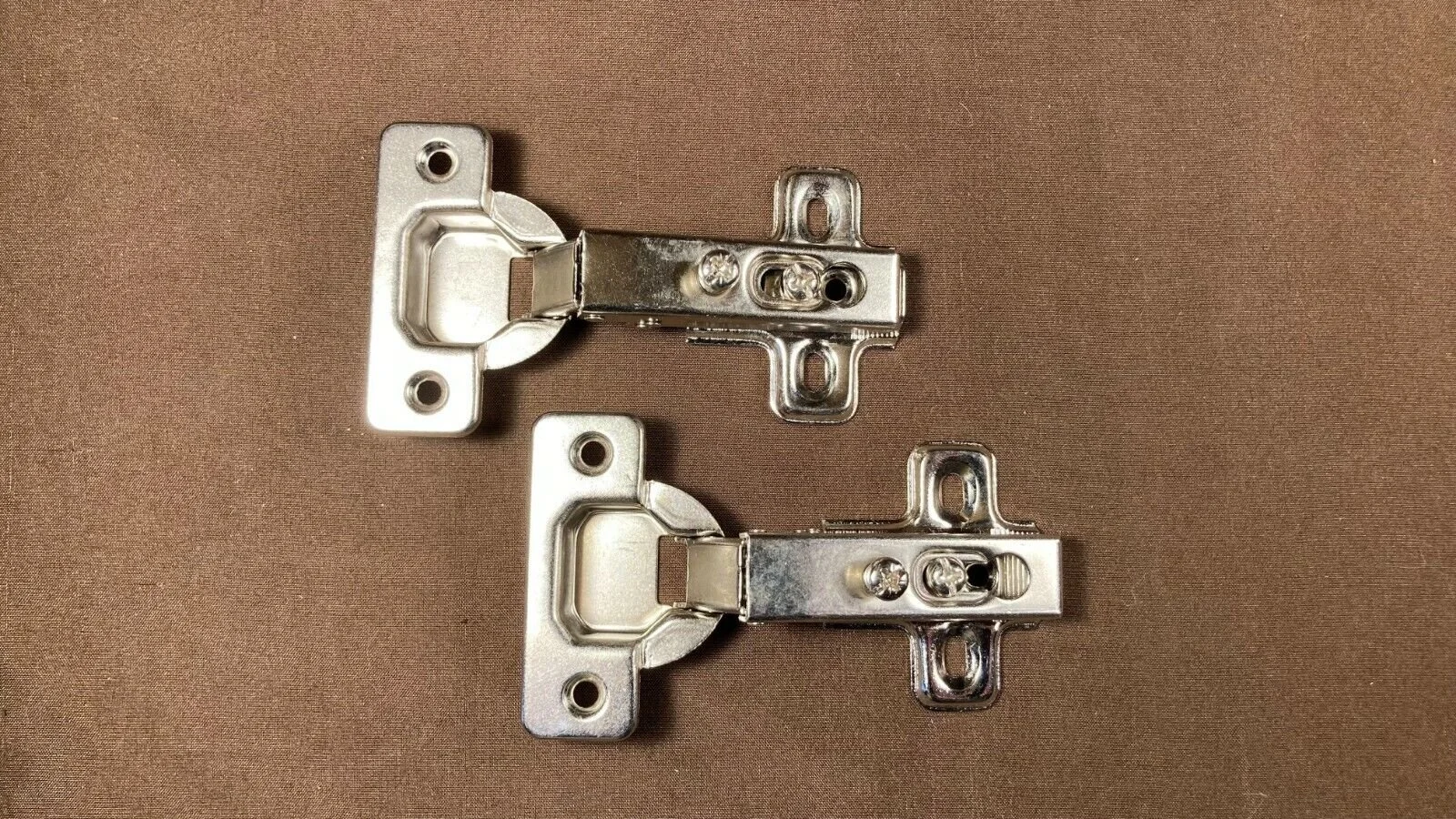
Overlay hinges suit doors that sit on top of the cabinet frame rather than inside it. Full overlay versions cover the entire frame for a streamlined, contemporary front. Partial overlay versions leave part of the frame visible, which shows up often in transitional kitchen designs.
Pros: Available in full or partial overlay. Pairs naturally with modern cabinet fronts.
Cons: Must match the overlay amount exactly. Limited use on inset cabinetry.
6-Inset Hinges

Inset hinges fit doors that sit flush within the cabinet opening, level with the surrounding frame. Cabinetry gains a refined, built-in appearance from this style, though it demands tighter tolerances during installation. Inset doors need a consistent reveal, often close to 1/8 inch, on every side, so even a small gap variance stands out immediately. Getting that reveal even usually means holding the door square while marking hinge placement, rather than eyeballing it and adjusting after the fact.
Pros: Creates a clean, custom-built look. Common in high-end kitchens.
Cons: Needs very precise fitting. Costs more to install correctly.
7-Pivot Hinges

Pivot hinges, also called knife hinges, use two interlocking metal plates that rotate around a single pivot point. One plate recesses into the door edge, and the other mounts inside the frame. Almost nothing shows when the door shuts, so these hinges suit minimalist or decorative cabinetry.
Pros: Nearly invisible when closed. Gives doors a sleek, modern edge.
Cons: Offers less adjustment than European hinges. Not ideal for oversized doors.
8-Demountable Hinges
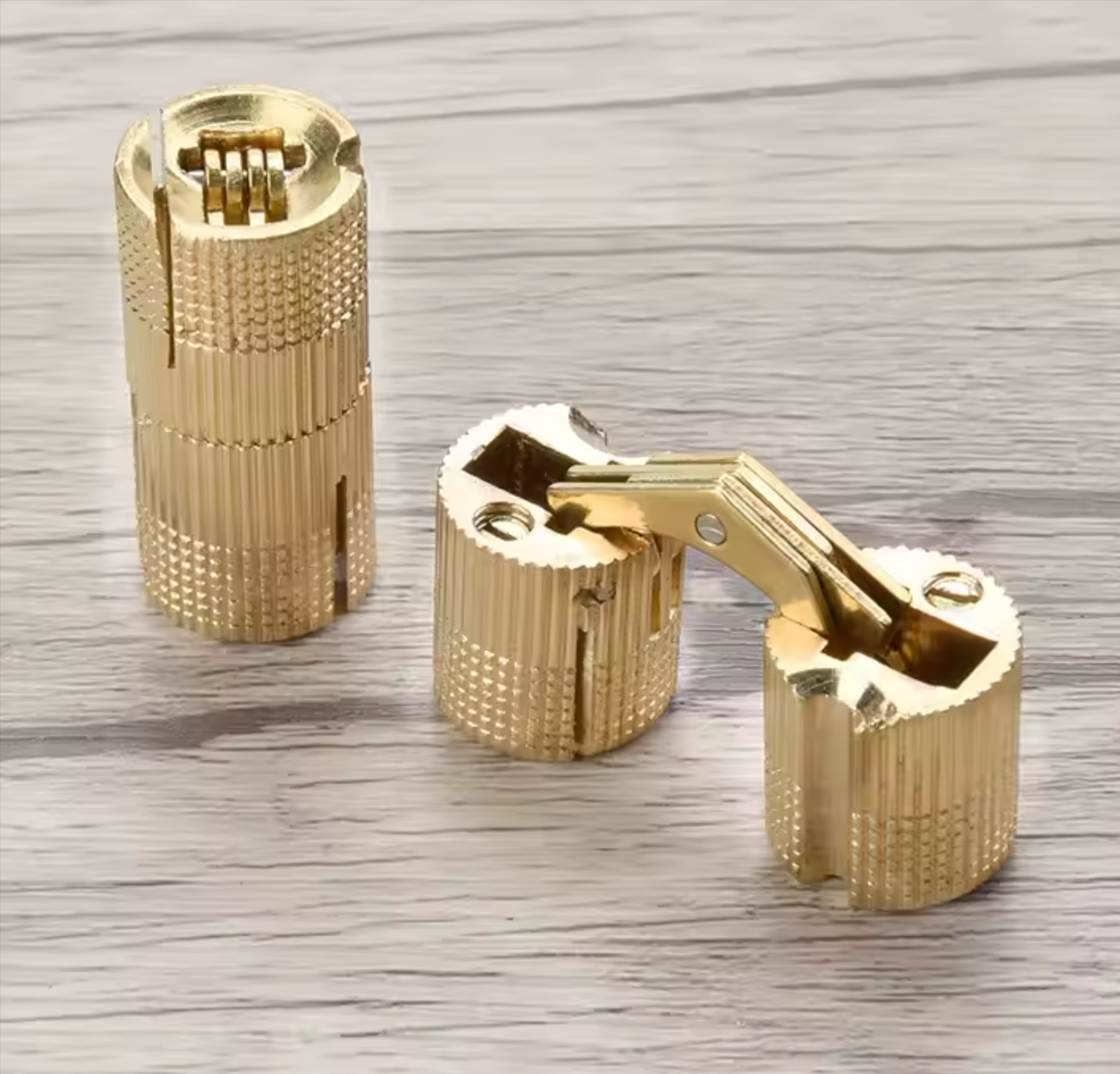
Demountable hinges let you remove and reattach a cabinet door without unscrewing any hardware. The two hinge sections snap apart at a center point, which comes in handy in kitchens where doors come off often for cleaning, painting, or repairs.
Pros: Doors detach and reattach in seconds. Convenient for maintenance and refinishing.
Cons: Less common, so parts can be harder to source. Not the strongest option for heavy doors.
Painted inset kitchens often use them, since painted doors typically need touch-ups or a full refinish every few years, and pulling doors without unscrewing hardware saves real time.
9-Wrap-Around Hinges

Wrap-around hinges extend further around the corner of the cabinet frame than a standard hinge. That extra material spreads the door's weight across a wider area, which makes wrap-around hinges one of the sturdier types of cabinet hinges for large, heavy doors.
Pros: Adds extra support for heavy doors. Reduces stress on the cabinet frame.
Cons: Bulkier than standard concealed hinges. Unnecessary for smaller, lighter doors.
They show up most often on oversized pantry doors and appliance-panel fronts, where a standard concealed hinge would loosen faster under that added weight.
10-Semi-Concealed (Offset) Hinges

Semi-concealed hinges show only the knuckle where the door meets the face frame, while the rest stays hidden. Builders choose them mainly for function over style, so you'll often find them on older or budget-built cabinetry.
Pros: Simple, reliable design. Costs less than fully concealed hinges.
Cons: Slight hardware visibility at the seam. Fewer finish options than European styles.
Choosing and Installing Cabinet Hardware the Right Way
Matching the correct hinge to your door style solves half the problem. Installation solves the rest, since even a well-chosen hinge can sit crooked or wear out early if it isn't mounted and adjusted correctly. Most concealed hinges adjust on three axes: depth, height, and side-to-side tilt. Knowing which screw controls which axis is the difference between a five-minute fix and a door you keep fighting with every week.
That's where professional installation earns its keep. At Install Kitch, we design, supply, and install cabinetry in Brooklyn and New York City, partnering with manufacturers on everything from ergonomic German kitchens to classic American cabinetry. That range means we've installed most types of cabinet hinges across those projects, and we know which one belongs on your specific doors. Whether you're swapping a few worn kitchen cabinet hinges or planning a full remodel, correct installation keeps every door aligned for years.
Final thoughts:
Cabinet hinges seem like a small detail until one fails, and then the whole door feels off. Knowing the types of cabinet hinges available, and matching them to your door's overlay and weight, keeps cabinetry working smoothly for years. Whether you're updating a single cabinet or planning a full kitchen, Install Kitch can help you choose and install the right hardware across Brooklyn, New York, and the surrounding area.